
How a Man-in-the-Middle Attack Used My Semi-Truck to Steal $140K of Power Cable
In July 2015, I was a 25-year-old owner-operator who hauled 44,000 lbs of industrial copper cable straight into a thieves’ cross-dock, got paid in full, and spent the next week keeping myself out of a felony indictment. Ten years later, the exact same protocol flaw powers modern US double-brokering.

Denis Taskin
Founder & CEO, id.Verify · Former Owner-Operator
In information security textbooks, a Man-in-the-Middle (MITM) attack is drawn as a neat diagram: Alice, Bob, and Mallory sitting quietly between two TLS endpoints rewriting packets while both sides think they are talking to each other.
In over-the-road trucking, the exact same attack smells like diesel, weighs 44,000 pounds, pays wire-on-delivery without haggling, and ends in a defense attorney’s office with a sentence you never forget: “If you drive to that precinct alone to give a witness statement, you will sleep in a holding cell tonight — because the only real signature on the factory’s bill of lading is yours.”
In July 2015, I was 25 years old, running my own tractor-trailer. Over forty-eight hours, a cargo-theft crew turned me and my truck into a physical proxy server. I picked up $140,000 worth of heavy industrial power cable from a high-security manufacturing plant, delivered every spool to the exact warehouse my “broker” instructed, collected my full freight rate, and only learned twenty-four hours later that the cargo had vanished.
1. Setting Up the Physical Proxy
The load looked completely ordinary on the board: 20 metric tons (44,000 lbs) of armored power cable on wooden reels, picking up at a major cable factory and heading 650 miles east. A dispatcher with clean paperwork booked my truck, asked for copies of my CDL, tractor registration, and trailer plate, and promised half the rate once loaded and the balance as soon as the warehouse signed off.
What I could not see from inside my cab was the second half of the circuit.
Three states away, a legitimate electrical distributor had purchased $140,000 of cable from the factory and posted their shipment to find a truck. The thieves answered that distributor posing as an established motor carrier — and handed the distributor my real CDL, my real tractor VIN, and my real trailer license plate as “their company driver.”
At the exact same moment, they turned around and hired me on the spot market, posing as the cargo owner.
To the shipper at the dock, I was the carrier they hired. To me in the cab, the voice on the burner phone was the shipper. Neither of us knew the middleman existed.
2. Why the Factory Gate Passed Me Without Blinking
People outside logistics always ask the same question: how does a stranger drive out of a guarded plant with $140,000 of copper on a flatbed or dry van?
Because the guard shack verified identity without verifying the channel. The legitimate buyer had emailed my exact driver’s license number and truck plate to the factory’s shipping office. When I rolled up to the gate, handed my physical CDL through the window, and backed into the bay, every character matched the gate pass 100%.
Better yet, freight brokerage has a built-in silence rule that scammers exploit like a zero-day vulnerability: “Never discuss rates or broker names at the shipper’s dock.” Every legitimate broker tells drivers not to talk money with dock workers so they don’t get back-solicited. So when the shipping clerk handed me the factory bills of lading showing the real buyer’s destination city 650 miles away, nobody mentioned who booked the truck.
Two hours into the drive, my “customer” called with the oldest routine change-of-plans in freight:
“Hey boss, our main jobsite crane is down until Monday. Don’t haul it all the way east — drop the reels at our regional cross-dock warehouse off the ring road instead. Our crew will transload it from there, and we’ll wire your full rate the second the forklift pulls the last spool off.”
Every owner-operator has heard a legitimate version of that call a dozen times. Shorter miles, full rate, daytime unload at a real commercial warehouse with a forklift crew waiting. They unloaded the reels in forty minutes, stamped my copy, and wired my freight payment in full.
3. The Phone Call Nobody Wants to Answer
Twenty-four hours later, my phone rang from an unknown landline. It was the head of corporate security for the real buyer, followed twenty minutes later by a felony cargo-theft detective.
From law enforcement’s seat, the evidence chain was brutally simple: $140,000 of cable left the factory on my trailer, under my wet signature, and never arrived at the buyer’s facility. Every phone number the middlemen had used was a VoIP/burner SIM already powered off and tossed.
Before driving in to hand over my paperwork, I sat down with an experienced criminal defense lawyer. He looked at my signed BOL and wire receipt for thirty seconds and stopped me cold: without proving who took custody of the reels after they left my trailer, I was the last verifiable human in the chain.
Instead of walking in empty-handed, I spent a sleepless week doing our own legwork across four regions — pulling gate logs at the cross-dock yard, tracking down the second unwitting driver hired to move the cable out of that warehouse two hours after I left, and pulling highway traffic-camera frames of the second tractor-trailer hauling those exact reels north.
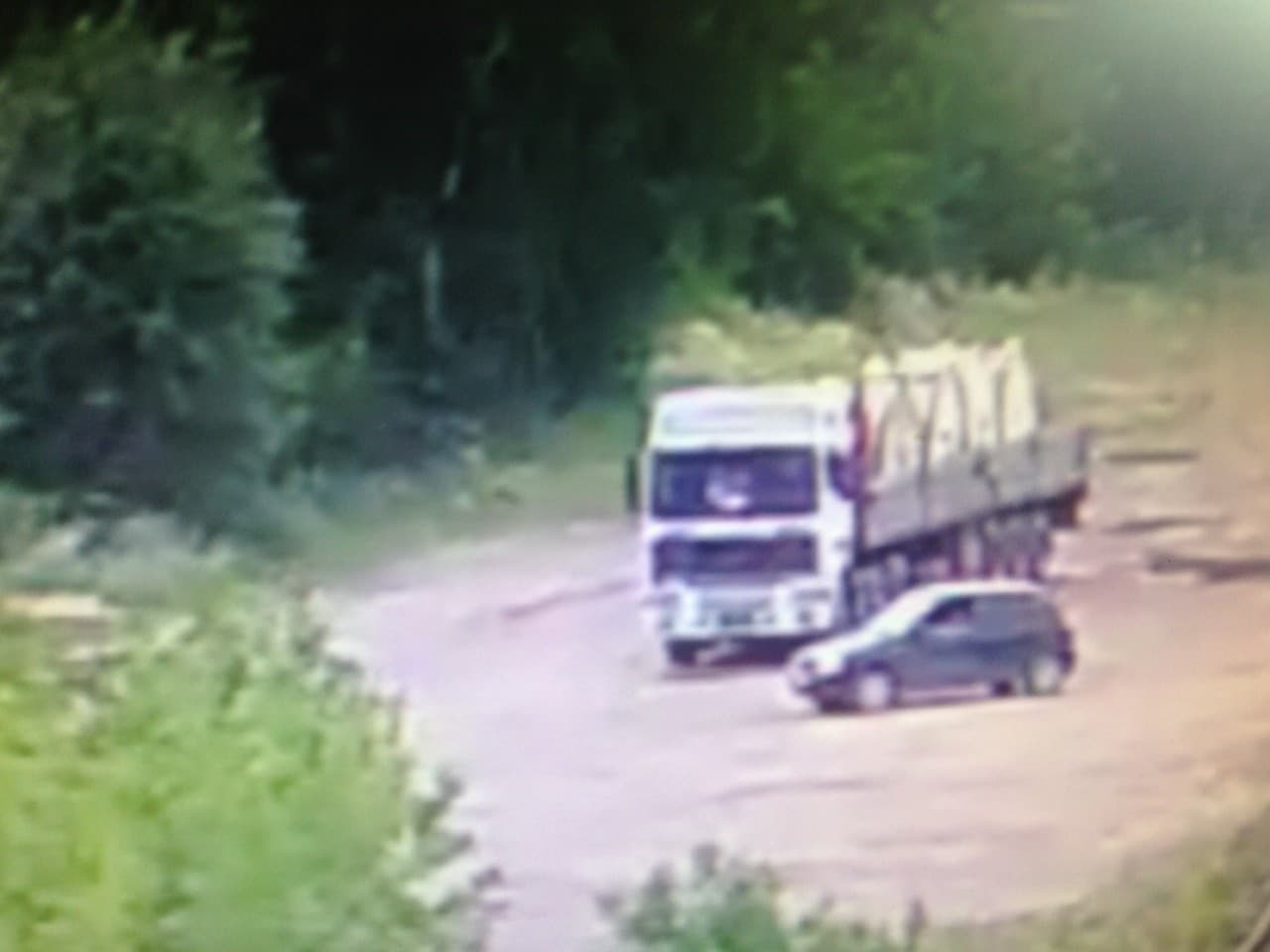
4. Ten Years Later: Why US Double-Brokering Is the Exact Same Bug
Over the decade after that haul, I grew out of the driver’s seat into operating a fleet, running a freight brokerage floor, and building logistics software full-time. When we started examining carrier identity theft and double-brokering in the United States, it felt like déjà vu.
Whether a scammer hijacks a dormant Ohio MC number from an overseas call center, doctors the coverage limit on an ACORD 25 Certificate of Insurance, or slips a spoofed dispatch email into a broker’s inbox, the underlying protocol failure has not changed since 2015:
- A registry lookup proves a company exists — not who sent the email. Typing an MC or USDOT number into FMCSA SAFER confirms that “Acme Trucking LLC” has active authority. It tells you zero about whether the PDF packet sitting in your inbox actually belongs to Acme Trucking.
- Single documents are trivial to forge; a consistent cross-document graph is not. Editing one number on a PDF takes two minutes. Making an altered COI, an IRS W-9, an FMCSA authority grant letter, a rate confirmation, a driver’s CDL, and a tractor’s 17-character NHTSA VIN (including its ISO 3779 position-9 check digit and Class 8 GVWR rating) agree with each other and with live federal records is exponentially harder.
- Text layers lie when PDFs are edited. Reading the invisible text layer of a PDF misses numbers pasted over an insurance certificate. Pages have to be inspected visually as rendered pixels and compared field-by-field against authoritative federal sources.
- Legal impossibilities are not “risk points.” A carrier with revoked operating authority or a confirmed US sanctions match should never score “72 out of 100” — eligibility (PASS, REVIEW, BLOCK) has to be decided on its own rail, separate from risk scoring, and ambiguous signals belong in front of a human reviewer rather than guessed away.
5. Why We Built id.Verify
Enterprise brokerages spend $10,000+ a year locking into sprawling onboarding portals, while small and mid-sized US freight brokers — the 1-to-25 seat shops moving the backbone of spot freight — are often forced to eyeball W-9s and COIs by hand between phone calls while double-brokers probe them all day.
We built id.Verify around one rule we learned the hard way: never trust an identifier somebody typed into a form. You drop whatever the carrier emailed you — PDFs, scans, or phone photos — and we identify the carrier strictly from the paperwork itself, pull live FMCSA, NHTSA vPIC, and US Consolidated Screening List records, and hand you a cryptographically sealed report naming every discrepancy before you tender the load.
Software will never replace a sharp broker’s gut when a dispatcher suddenly asks to “drop the freight at a cross-dock off the highway instead.” What software should do is catch every forged certificate, mismatched DOT/MC, invalid VIN check digit, and identity gap in ten seconds — before your freight is ever on their trailer.